THE HIPPIE/PEACE MOVEMENT
Peace Movement
The events which mostly prompted the Hippie/Peace Movement where the start of the Vietnam war and the death of American president, John F. Kennedy. The Vietnam War prompted them to try and spread the message 'spread love, not war' while JFK's death had prompted the youth to take matters into their own hands and fight for what they believe in instead of relying on the government.
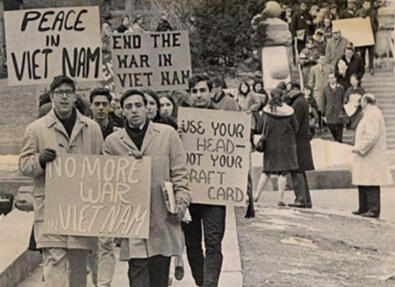
Students protesting against the Vietnam War (1965)
Post World War 2 was when the first modern social movement in Europe and America had happened. This was called the peace movement. Before the peace movements of 1950 -1960s, people who were against the war would be accused of treason and people would be imprisoned, not included in the social world/forced to move out of the country which is very different to how life is right now where every situation like this is expected to have a peace movement to go with it. The peace movement was protesting against the war because of how it went against their morals as well as because of their concern for the economy. The moral concerns that they had were about how innocent Vietnamese peasants were being killed in the crossfire as well as environmental damage because of the Americans dropping damaging chemicals. Many young American soldiers were also suffering and dying for something which they didn't have much involvement in in the first place and which they were drafted to be apart of. The military was spending lots and lots of money because of the war and this left less money to spend on the community and other things going toward the community like welfare, housing and urban renewal.
Hippie Fashion
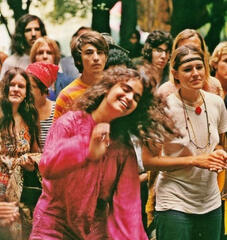
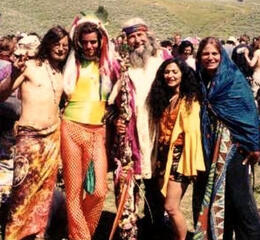
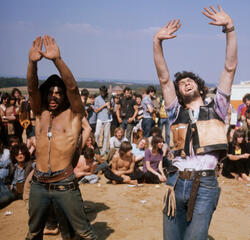
Various photos of people during the 1960s -1970s at festivals and gatherings
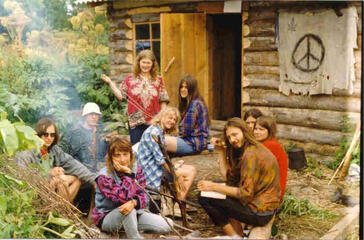
Hippie style included long and flowy hair for both men and women. Men also often had beards. Since they had rejected the modern mainstream style in America , ethnic clothes were popular as well as old fashioned styles. Headbands, floppy hats, flowing scarves, blue jeans or bell bottom jeans and tie dyed shirts were popular clothing items among the hippies at the time. A lot of their clothing was second hand as they didn't want to give in to materialism. It was either that or they made their own clothes. Many flowers were also featured in their clothing as hippies had felt connection to nature as this became a symbol for that. Their clothing was often colourful and patterned as well as very free and flowy.
Hippie Communes
Commune : A group of people living together and sharing possessions and responsibilities.
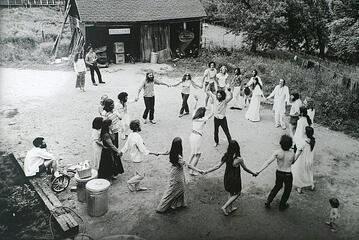
Hippie communes were group living spaces, communities or villages where people who shared the same interests and passions could live simply just like their ancestors who farmed for resources themselves and only made what they needed to. Hippies places the needs and values of the commune over their own. They lived in a way which was natural and organic. Each hippie commune was different in the way that some were deeply religious and others weren't as well as some having drug use involved and others not. Some were against capitalism and were very self sufficient and succesful by themselves while others participated in capitalism by owning businesses and so forth. There was no one example/model of a hippie commune as they all had their own individualised personality that they had developed over time. By living like this they tried to achieve not giving into the materialism of the world. Some believed that social problems would resolve themselves by people coming together and loving each other but that was just out of naivete and obviously didn't actually work that way.
Woodstock
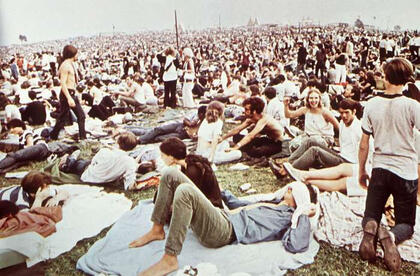
Image of audience at the Woodstock Film & Art Festival (1969) taken from the film 'Woodstock" (1970)
Woodstock was an art and film festival held in 1969. 500,000 people came to the event free of charge and enjoyed each other's company. There was bad weather as well as a large amount of attendees but that didn't stop the people who attended from having a good time.
There was a wide variety of people who attended the event including hippies. Woodstock was an opportunity for people to escape into the music and spread messages of unity and peace.
Even with the downfalls of the festival, there was a harmonious vibe at the event. There was a lack of violence as well as a large number of psychedelic drugs being used.
32 musicians performed at Woodstock and there was a combination of both local and world famous artists. Some of the musicians which performed include The Grateful Dead, Janis Joplin, The Who and Jimi Hendrix. The festival went down in history because of how everyone got together over the three days and had fun and enjoyed the music.
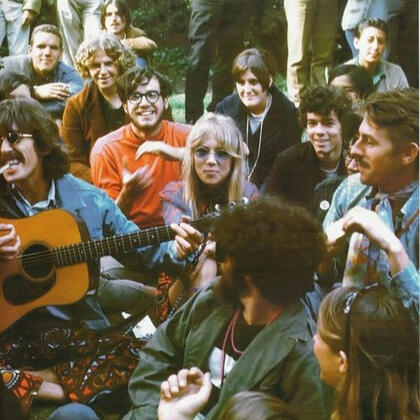
Artists Pattie Boyd and George Harrison (1970s)
Peace Train - Cat Stevens
Oh, I've been smilin' lately,
Dreamin' about the world as one
And I believe it could be;
Someday it's going to come
The lyrics are about Stevens had hopes and wished for the world to be a better place in the future and unite as one, instead of being so divided.
Hippie Music
Looking back at the music of a time period can open us up to how it was like at the time. Many songs during the 1960s-1970s had lyrics which had talked about social issues and how they felt. The music of this era offered an outlook on the social issues which were prevalent at the time. The lyrics touched on topics like war and their opposition to it, their wanting for peace and how they believed that women and indigenous people deserved more rights. Music was a big part in spreading anti-war protests and peace movements. There were several songs and artists who used their music as a platform to spread what they believed in and even to this day there are some artists who use music as their platform to speak out.
references
The Editors of Encyclopaedia Britannica (unknown year) Hippie - History, Lifestyle & Beliefs, accessed on 5/11/2020 <https://www.britannica.com/topic/hippie>
Cogswell, N (2016) The History Of The Hippie Cultural Movement, accessed on 5/11/2020 <https://theculturetrip.com/north-america/usa/california/articles/the-history-of-the-hippie-cultural-movement/>
Unknown Author (Unknown Year) Glossary of Events: Pe, accessed on 5/11/2020 <https://www.marxists.org/glossary/events/p/e.htm>
ushistory.org (Unknown Year) The Antiwar Movement, accessed on 5/11/2020 <https://www.ushistory.org/us/55d.asp>
All That’s Interesting (2015) Society’s Dropouts: 31 Eye-Opening Photos Of America’s 1970s Hippie Communes, accessed on 10/11/2020 <https://allthatsinteresting.com/hippie-communes#:~:text=The%20product%20of%20this%20dissatisfaction,of%20some%20mind%20altering%20substances>
Hastwell, A (2016) Life on a hippie commune, 40 years on, accessed on 10/11/2020, <https://www.abc.net.au/radionational/programs/blueprintforliving/life-on-a-hippy-commune-in-new-south-wales/7380756>
Unknown Author (Unknown Year) Hippies - Fashion, Costume and Culture, accessed on 12/11/2020 <http://www.fashionencyclopedia.com/fashioncostumeculture/Modern-World-Part-II-1961-1979/Hippies.html#:~:text=Since%20hippies%20rejected%20the%20modern,tie%2Ddyed%20T%2Dshirts>
history.com editors (2018) Woodstock, accessed on 12/11/2020 <https://www.history.com/topics/1960s/woodstock>
Conway, TL (2020) 17 Greatest Hippie Songs of the 1960s and 1970s, accessed on 13/11/2020 <https://spinditty.com/genres/Greatest-Hippie-Music-of-the-60s-and-70s>
Baker, CJ (2018) The Protest Movement: The 10 Best Political Protest Songs of the 60s, accessed on 13/11/2020 <https://spinditty.com/playlists/The-Protest-Movement-The-10-Best-Protest-Songs-of-the-60s>
Sullivan, T & Duncan, P (2012) Tune on, Tune In, Drop Out : Counter Culture in the 1960s', accessed 6/11/2020 <youtube.com/watch?v=JJABGpyoJ20>